 training calendar


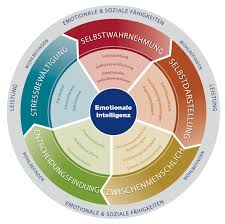 MHS’s EQ-i2.0 model of Emotional Intelligence is comprised of 16 elements that collectively make up our behavioral face to the world—what we look and sound like to and the impact we have on the world around us. The most common approach taken with this popular tool (EQ-i) is considering the score of each individual element—working one behavior at a time.
At OKA, we’ve found that the relationship between elements—and sometimes the tension between them—is a more powerful and helpful approach to growing and refining our Emotional Intelligence. In other words, more important than any one score is the combination—the blend or cocktail—of various elements when taken together. This blog will lay out some of the key EQ blends we at OKA feel are the most helpful, telling, and important.
Considering the relationship between different EQ elements within any one client (or team)—largely independent of individual scores—significantly deepens our understanding of Emotional Intelligence and the behavioral patterns we tend to display. For instance, consider the four EQ elements from the EQ-i2.0 model defined below.
Assertiveness
your ability to put your needs, thoughts and opinions out into the world—even when doing so invites opposition or conflict or causes you to take a stand
Independence
your ability and tendency to be self-directed in your thinking, feeling and actions—to go it alone when needed
Interpersonal Relationships
your ability and tendency to give and receive trust and compassion and to establish and maintain mutually satisfying personal relationships
Impulse Control
your ability or willingness to delay an initial temptation to do or say something—to filter action or expression as appropriate
EQ Tensions
Sometimes the most important thing to consider is the degree to which one EQ element balances or opposes another.
Assertiveness & Impulse Control
 While your Assertiveness score reflects the degree to which you tend to put your needs, desires and opinions into the world, equally as important to this question is your Impulse Control score. In fact, on one level, given the complementary nature of these EQ energies, having these scores in balance—whether they are both high, mid-range or low—is often a desirable outcome, for it suggests a balancing tension between the tendency to speak up and the opposing ability hold back.
Independence & Interpersonal Relationships
 Similarly, while an Independence score suggests your ability and tendency to be autonomous and self-directed in your thoughts and feelings, that is balanced by Interpersonal Relationships—your tendency and ability to craft relationships and to nurture trust and compassion. While high and/or low scores all convey important meaning, the relationship between these energies—whether both high, both low or some other combination—is particularly telling. Independence is the natural balancing energy for Interpersonal Relationships (and vice versa).
EQ Cocktails
Sometimes the more interesting and useful insight comes from not the balancing tension between opposing EQ elements, but the different attachments we have to related elements. OKA refers to these as EQ cocktails. Sticking with the elements we have already defined, here are a couple of examples:
The “Good Soldier Cocktail”
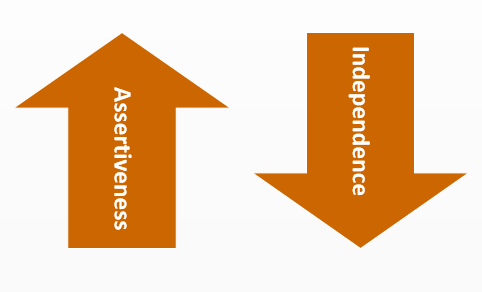 Someone who brings more Assertiveness than Independence to the world around him tends to have the appearance (and maybe the reality) that he is open to arguing and speaking up for things beyond his personal level of conviction or commitment. More Assertiveness than Independence leads to a “hired gun” or a “good soldier” pattern of behavior.
The “Passive Aggressive Cocktail”
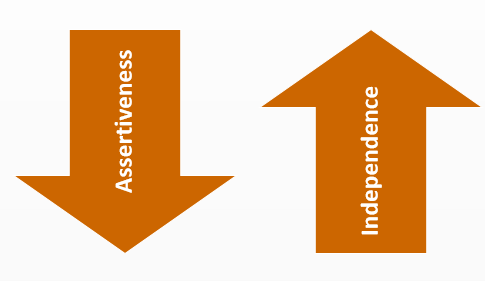 If, on the other hand, a client is more actively engaged in Independence than Assertiveness, the resulting behavior will be someone who appears to have desires, convictions or opinions that she is not willing or interested in voicing or advocating for. This combination of behaviors leads to the appearance (and, perhaps, the reality) of a covert or hidden agenda. This is why we refer to higher Independence than Assertiveness as the “passive aggressive” cocktail.
The Big 3—EQ’s Power Cocktail
If considering the EQ elements that take on special power and usefulness when blended, every coach, trainer and EQ-i user should take notice of the trio of Self-Regard, Self-Actualization, and Optimism. So important is this combination of EQ elements that they make up the Big 3—EQ’s power cocktail.
 Self-Regard
the ability and tendency for you–in full light of both your positive and negative qualities—to both like and have confidence in yourself
 Self-Actualization
your ability and tendency to grow and strive–to see potential, set meaningful goals and work toward your betterment and fulfillment
 Optimism
your ability and tendency to look at the brighter side of life and to maintain a positive attitude even in the face of adversity—Optimism gives you hope and enables you to see the future as a positive, inviting place
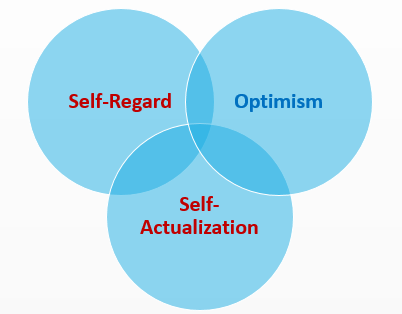 These three elements are unique and the blend they form is foundational. Here are some interesting thoughts about this most compelling of all blends/cocktails:
- Building up—a positive view of the future (Optimism) creates the need/opening for setting goals and striving (Self-Actualization), and research shows us that setting a goal and achieving it is the single greatest action to boost self-esteem (Self-Regard). And a positive view of self contributes significantly to an optimistic outlook (Optimism). These three EQ elements—like a braid or a tangle—can work in concert to not only support each other, but to drive them upwardly.
- Pulling down—a negative view of the future can also discourage someone from setting goals, which results in loss or stagnation, which cuts into self-esteem. So whereas this combination of elements can collectively boost each other, low engagement with any of these elements can cut into the other two, and they can—in concert—pull each other downwardly.
OKA’s Hile Rutledge designed and delivered the presentation, “Mixing Your EQ Cocktail: Balance, Blends, & Behavioral Change” for a recent ATD International Conference. This presentation introduced and explored the concept of behavioral blends within the EQ-i model. The slides from this presentation are offered here. https://oka-online.com/wp-content/uploads/2017/06/Mixing-Your-EQ-Cocktail.pdf
To dive deeper into the use and exploration of these behavioral tensions and blends, consider taking OKA’s class, Advanced EQ Interpretation Skills (Online), an experiential, advanced application of the EQ-i for coaches and trainers to teach and reinforce a sophisticated approach to the EQ-i and its interpretation.
Leave a Comment